

Materials
Make It Last 25 Years: Caring for Modular Furniture (and Using Your Warranty)
Factory-built modular furniture will comfortably last 25 years — if you clean each finish the way it was designed to be cleaned, keep hinges and channels dry and tightened, manage monsoon humidity, and let the service team handle anything structural. Here is the exact routine, finish by finish, plus the warranty rules that protect your investment.
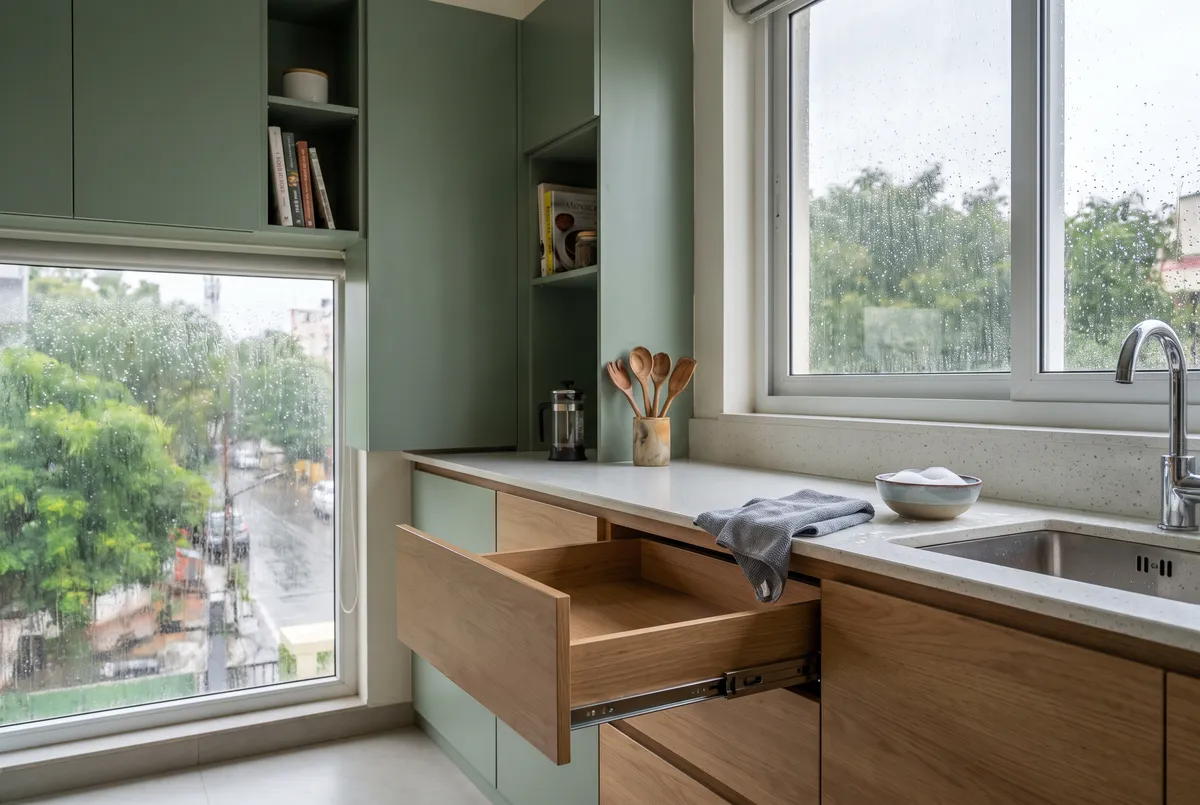
How long should modular furniture actually last?
Quick answer
Factory-built modular furniture should last 20–25 years, since quality European cup hinges are cycle-tested to between 80,000 and 200,000 open–close operations and boards to IS 710 or IS 12823 hold their shape through humidity swings. Early failure usually comes from standing water, abrasives and overloading, not age.
Factory-built modular furniture should last 20–25 years — the board and hardware are engineered for it, and care decides whether it gets there. A soft-close cup hinge from a quality European maker is cycle-tested to between 80,000 and 200,000 open–close operations; at ten openings a day, that is 22 to 55 years of use. The carcass matters just as much: boiling-water-proof plywood to IS 710 or pre-laminated boards to IS 12823 hold their shape through decades of Bengaluru's humidity swings, while cheap commercial-grade board starts swelling at the edges within five monsoons.
What kills modular furniture early is rarely age. It is standing water at the sink cabinet, abrasive cleaners on delicate finishes, overloaded drawers, and small hinge misalignments left uncorrected until they strain the board itself. Every one of those is preventable with a modular furniture care routine that takes less time per month than cleaning your hob — and that routine is exactly what follows.
How do you clean laminate, acrylic, PU and veneer finishes?
Quick answer
Match the cleaner to the finish: laminate takes warm water with a drop of dish liquid, acrylic a 1:10 dish-soap solution after dry dusting, PU-painted shutters a damp cloth only, and veneer a well-wrung cloth along the grain. Avoid bleach, ammonia glass cleaners and solvents.
Each finish wants a different cleaner, and using the wrong one does permanent damage. Laminate is the most forgiving: warm water with a drop of dish liquid on a microfibre cloth, wiped dry immediately. Never use scouring pads, bleach or acidic bathroom cleaners — they dull the surface and eat into the edge banding.
Acrylic demands the most respect. Dust it dry first, because wiping settled dust drags grit across the gloss. Then clean with a 1:10 dish-soap-to-water solution and a fresh microfibre cloth. Ammonia-based glass cleaners are the classic mistake — they cause fine surface cracking, called crazing, that no polish can reverse. Light scratches, though, buff out with a dedicated acrylic polish.
PU-painted shutters behave like car paint: a damp cloth only, no thinners or solvent-based sprays. Natural veneer is real wood — dust it dry, wipe along the grain with a well-wrung cloth, wax-polish at most twice a year, and keep it out of direct afternoon sun, which fades the grain unevenly.
What maintenance do hinges and drawer channels need?
Quick answer
Set aside ten minutes a quarter to check shutters for droop, adjust cup hinges with a screwdriver, tighten mounting screws and clear grit from drawer channels. Use dry PTFE or silicone lubricant on sticky runners, never cooking oil, and respect load ratings of around 30 kg.
Ten minutes a quarter keeps hinges and channels working like new — most kitchen cabinet maintenance is exactly that small. Open every shutter and check for droop or rubbing: modern cup hinges adjust in three directions with two screws, so alignment is a screwdriver job, not a service call. Tighten the mounting screws while you are there; screw joints loosen fractionally with daily use.
Drawer channels want to stay clean and dry. Vacuum or wipe out crumbs and masala dust — grit is what makes soft-close channels grind. If a channel feels sticky, a light spray of dry PTFE or silicone lubricant on the runners is enough. Never use cooking oil or general-purpose spray oils; they attract dust and turn into an abrasive paste.
Respect load ratings. Standard box channels carry around 30 kg and heavy-duty versions 40–50 kg. The wet grinder, the pressure-cooker stack and twelve litres of oil bottles in a single drawer is how good hardware dies young.
How do you protect modular furniture during Bengaluru's monsoon?
Quick answer
Ventilation protects modular furniture better than any product, because Bengaluru's humidity sits above 80% from June to September. Air the house daily, run the kitchen exhaust while cooking, open wardrobe shutters weekly, keep silica gel or camphor inside cabinets, and mop sink-cabinet spills immediately.
During the monsoon, ventilation matters more than any product you can buy. Bengaluru's relative humidity sits above 80% from June to September, and engineered board absorbs that moisture through any exposed edge. Air the house daily, run the kitchen exhaust while cooking, and leave wardrobe shutters open for an hour each week so trapped humid air escapes.
Inside cabinets, silica gel pouches or camphor blocks absorb residual moisture — recharge or replace them monthly. Avoid drying clothes on a stand pressed against a wardrobe: you are steaming the shutter for hours. Mop spills at the sink cabinet immediately; standing water at the base is the single most common cause of edge swelling.
Watch the edges. If banding lifts or a corner feels raised, do not press it back with adhesive from the hardware shop — photograph it and raise a service request. Caught early, edge repairs are minor; ignored through one full monsoon, they become shutter replacements.
What voids a modular furniture warranty — and what should a good one cover?
Quick answer
A good warranty covers manufacturing defects in writing — delamination, edge-banding peel-off, warping beyond tolerance and hardware failure in normal use — with exclusions and the claim process named. Coverage is commonly voided by unauthorised repairs or drilling, plumbing water damage, overloading, harsh chemicals, and shifting units elsewhere.
A good modular warranty covers manufacturing defects — delamination, edge-banding peel-off, warping beyond tolerance, and hardware failure in normal use — for a stated period, in writing. That last part matters: much of the interior warranty India market runs on verbal assurances that evaporate when the site engineer changes jobs. Insist on a warranty certificate that names the coverage, the exclusions and the claim process. At AesthetiX Spaces we put a 25-year warranty on modular units precisely because factory-built carcasses and branded hardware make that promise safe to keep.
What voids a warranty is remarkably consistent across the industry: unauthorised repairs or modifications (including drilling and third-party carpentry), water damage from plumbing or seepage rather than the furniture itself, overloading beyond rated capacity, and damage from harsh chemicals or abrasives. Shifting units to another room or flat usually ends coverage too, since carcasses are engineered for their installed position.
Read the exclusions before you need them — five minutes at handover saves an argument in year six.
When should you call service, and when is DIY fine?
Quick answer
Call service for anything structural: swollen or delaminating board, hinge or channel replacement, soft-close pistons that have lost damping, anything electrical, and work near the gas line or chimney. Keep DIY to cleaning, tightening screws, aligning hinges and replacing silica pouches — outside repairs can void coverage.
Call service for anything structural, and keep DIY to cleaning and screwdriver-level adjustments. Safe to do yourself: all the cleaning above, tightening loose screws, aligning hinges, replacing silica pouches, re-sticking a loose bumper pad. Call the service team for swollen or delaminating board, hinge or channel replacement, soft-close pistons that have lost their damping, anything electrical inside units, and any work near the gas line or chimney.
The reasoning is partly safety and partly the warranty itself — a well-meaning local carpenter's repair is the fastest way to void coverage on an otherwise valid claim. A professional fix also addresses the cause: a swollen sink-cabinet base is a plumbing conversation, not just a board swap.
This is why we build scheduled factory visits into every AesthetiX project — small issues get caught and corrected before they grow, on our time rather than yours. Whoever your studio is, ask one question at handover: who do I call, and how fast do you come? The answer tells you everything.
Frequently asked
Get your real number
Share your floor plan — we turn these rates into a line-by-line proposal, usually within one working day.
Get an instant estimate